

Competition vs. Cooperation
In an age obsessed with competition, the businesses gaining the deepest loyalty are often the most generous. Not generous as a marketing tactic. Generous as a philosophy.
What Is a Keiretsu?
After World War II, Japanese industry developed a powerful business structure known as the keiretsu, networks of companies linked through mutual interests, cooperation, and long-term strategic relationships. Some were vertically integrated, like Toyota and its supply chain partners. Others, like Mitsubishi, operated as broad horizontal alliances spanning multiple industries.
The goal was simple: strength through connection.
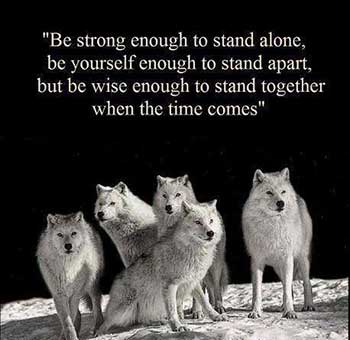
Rather than treating every neighboring business as an enemy, keiretsu networks understood that collaboration could create resilience far beyond what any isolated company might achieve alone.
Globalization and technological change eventually weakened many of Japan’s traditional keiretsu structures, but the underlying idea never disappeared. In fact, the internet age may have made it more relevant than ever.
Are Human Beings Competitive or Cooperative?
The old question remains: Are we fundamentally competitive or cooperative?
John Tauer, Ph.D., suggests the answer is both.
“One summer evening, still searching for ideas, I went for a bike ride through Madison’s Elver Park to clear my head. As I biked into the park, I saw a couple dozen men playing pick-up basketball. I biked on and saw hundreds of men and women playing co-ed softball. Finally, as I exited the park, I saw several games of youth soccer taking place. I was struck by a simple, but testable hypothesis: individuals enjoy activities where they can simultaneously cooperate with their teammates in competition against another team.”
That observation reaches far beyond sports.
Small businesses, artists, nonprofits, writers, educators, and entrepreneurs often thrive not by standing alone, but by forming informal ecosystems built on shared values and mutual support. A modern keiretsu may look less like an industrial giant and more like a network of creators amplifying one another through storytelling, referrals, partnerships, shared audiences, and collective visibility.
The Rise of Lethal Generosity
Technology writer Shel Israel describes this emerging culture as lethal generosity.
In Lethal Generosity: Contextual Technology & the Competitive Edge, Israel argues that the strongest modern networks are built not merely on transactions, but on authentic cultures of generosity. Companies that improve people’s lives before competitors do gain an advantage that is difficult to replicate.
Not because generosity is manipulative.
Because people recognize sincerity.
Storytelling as Social Currency
This model comes from the heart, not from the mind.
Entrepreneurs like Blake Mycoskie, founder of TOMS, the shoe company, did not begin with a calculated branding exercise. They responded first to human need. Customers who participated in that mission were not simply buying shoes. They were joining a story larger than themselves.
That distinction matters.
The moment generosity becomes purely performative or corporatized, people sense it immediately. Authenticity cannot be manufactured in a boardroom. But the sharing of authentic action, through storytelling, social media, and community networks, can spread with extraordinary power.
Generosity Scales Through Story
In the digital age, generosity scales through story.
People no longer buy only products or services.
- They buy participation in something meaningful.
- They buy values.
- They buy identity.
- And most importantly, they buy stories worth repeating.
Perhaps the future of small business does not belong solely to those who compete the hardest. Perhaps it belongs to those who connect the best.

Stephen Kastner is the founder of DesignWise Studios and Green Mountain Writers. His work spans storytelling, digital publishing, documentary filmmaking, photography, AI visibility strategy, and human-centered marketing. Beginning as a newspaper photojournalist in the 1980s and later building websites and online learning systems during the early internet era, he writes frequently about authenticity, media, communication, publishing, and the evolving relationship between technology and human identity.